НАРАТИВ І ДІЯ: КОПІРАЙТИНГ ЯК ІНСТРУМЕНТ ФОРМУВАННЯ СПОЖИВЧОГО ДОСВІДУ НА ІВЕНТАХ
DOI:
https://doi.org/10.31732/2663-2209-2025-80-191-198Ключові слова:
копірайтинг, event-маркетинг, маркетингові комунікації, етика маркетингу, PR, бренд, поведінка споживача, маркетингАнотація
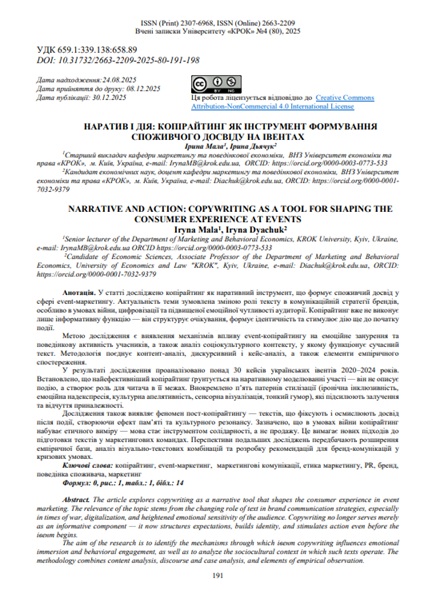
У статті досліджено копірайтинг як наративний інструмент, що формує споживчий досвід у сфері event-маркетингу. Актуальність теми зумовлена зміною ролі тексту в комунікаційній стратегії брендів, особливо в умовах війни, цифровізації та підвищеної емоційної чутливості аудиторії. Копірайтинг вже не виконує лише інформативну функцію — він структурує очікування, формує ідентичність та стимулює дію ще до початку події.
Метою дослідження є виявлення механізмів впливу event-копірайтингу на емоційне занурення та поведінкову активність учасників, а також аналіз соціокультурного контексту, у якому функціонує сучасний текст. Методологія поєднує контент-аналіз, дискурсивний і кейс-аналіз, а також елементи емпіричного спостереження.
У результаті дослідження проаналізовано понад 30 кейсів українських івентів 2020–2024 років. Встановлено, що найефективніший копірайтинг ґрунтується на наративному моделюванні участі — він не описує подію, а створює роль для читача в її межах. Виокремлено п’ять патернів стилізації (іронічна інклюзивність, емоційна надекспресія, культурна апелятивність, сенсорна візуалізація, тонкий гумор), які підсилюють залучення та відчуття приналежності.
Дослідження також виявляє феномен пост-копірайтингу — текстів, що фіксують і осмислюють досвід після події, створюючи ефект пам’яті та культурного резонансу. Зазначено, що в умовах війни копірайтинг набуває етичного виміру — мова стає інструментом солідарності, а не продажу. Це вимагає нових підходів до підготовки текстів у маркетингових командах. Перспективи подальших досліджень передбачають розширення емпіричної бази, аналіз візуально-текстових комбінацій та розробку рекомендацій для бренд-комунікацій у кризових умовах.
Завантаження
Посилання
Kotler, P., Armstrong, J. (2017). Principles of Marketing. Pearson. https://www.pearson.com
McKee, R., & Gerace, T. (2018). Storynomics: Story-Driven Marketing in the Post-Advertising World. Twelve. https://www.hachettebookgroup.com/titles/robert-mckee/storynomics/9781538727930/
Handley, A. (2014). Everybody Writes: Your Go-To Guide to Creating Ridiculously Good Content. Wiley. https://www.wiley.com/en-us/Everybody+Writes%3A+Your+Go+To+Guide+to+Creating+Ridiculously+Good+Content-p-9781118905555
Aspden, K., & Gelle, A. (2020). Event slogans and imagined participation. Journal of Consumer Culture. https://journals.sagepub.com/home/joc
Балабан, О. (2021). Комунікаційні стратегії у вітчизняному культурному просторі. Київ: Видавництво КНУКіМ.
Висоцька, І. (2021). Дослідження мовної гнучкості у публічних комунікаціях. Вісник КНУКіМ. Серія: Соціальні комунікації. https://journals.knukim.edu.ua
Cvent. (2024). Event Marketing Statistics. https://www.cvent.com
G2. (2024). Event ROI and Consumer Behavior Report. https://www.g2.com
ZBW – Leibniz Information Centre for Economics. (2023). Ukrainian SMEs and Digital Marketing During Crisis. https://www.zbw.eu
Gradus Research. (2023). Вплив війни на сприйняття рекламних повідомлень. https://gradus.app
Ukrainian Marketing Group. (2023). Пост-івентна комунікація: довіра та лояльність. https://umg.ua
Fedoriv Agency. (2024). Офіційний сайт. https://fedoriv.com
Banda Agency. (2024). Офіційний сайт. https://banda.agency
Postmen Agency. (2024). Офіційний сайт. https://postmen.com.ua
Downloads
Опубліковано
Як цитувати
Номер
Розділ
Ліцензія

Ця робота ліцензується відповідно до Creative Commons Attribution-NonCommercial 4.0 International License.