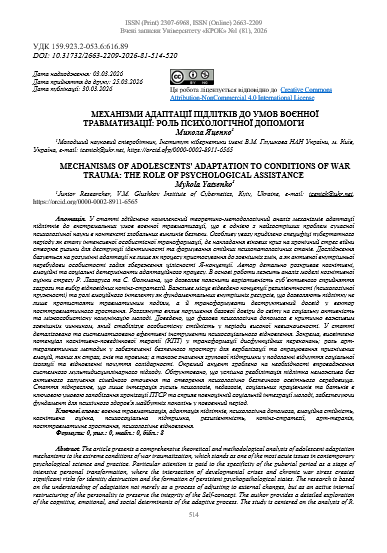
МЕХАНІЗМИ АДАПТАЦІЇ ПІДЛІТКІВ ДО УМОВ ВОЄННОЇ ТРАВМАТИЗАЦІЇ: РОЛЬ ПСИХОЛОГІЧНОЇ ДОПОМОГИ
DOI:
https://doi.org/10.31732/2663-2209-2026-81-514-520Ключові слова:
воєнна травматизація, адаптація підлітків, психологічна допомога, емоційна стійкість, когнітивна оцінка, психосоціальна підтримка, резилієнтність, копінг-стратегії, арт-терапія, посттравматичне зростання, психологічне відновленняАнотація
У статті здійснено комплексний теоретико-методологічний аналіз механізмів адаптації підлітків до екстремальних умов воєнної травматизації, що є однією з найгостріших проблем сучасної психологічної науки в контексті глобальних викликів безпеки. Особливу увагу приділено специфіці пубертатного періоду як етапу інтенсивної особистісної трансформації, де накладання вікових криз на хронічний стрес війни створює ризики для деструкції ідентичності та формування стійких психопатологічних станів. Дослідження базується на розумінні адаптації не лише як процесу пристосування до зовнішніх змін, а як активної внутрішньої перебудови особистості задля збереження цілісності Я-концепції. Автор детально розкриває когнітивні, емоційні та соціальні детермінанти адаптаційного процесу. В основі роботи лежить аналіз моделі когнітивної оцінки стресу Р. Лазаруса та С. Фолкмана, що дозволяє пояснити варіативність суб’єктивного сприйняття загрози та вибір відповідних копінг-стратегій. Важливе місце відведено концепції резилієнтності (психологічної пружності) та ролі емоційного інтелекту як фундаментальних внутрішніх ресурсів, що дозволяють підлітку не лише протистояти травматичним подіям, а й трансформувати деструктивний досвід у вектор посттравматичного зростання. Розглянуто вплив порушення базової довіри до світу на соціальну активність та міжособистісну комунікацію молоді. Доведено, що фахова психологічна допомога є критично важливим зовнішнім чинником, який стабілізує особистісну стійкість у періоди високої невизначеності. У статті деталізовано та систематизовано ефективні інструменти психосоціального відновлення. Зокрема, висвітлено потенціал когнітивно-поведінкової терапії (КПТ) у трансформації дисфункційних переконань; роль арт-терапевтичних методик у забезпеченні безпечного простору для вербалізації та опрацювання пригнічених емоцій, таких як страх, гнів та провина; а також значення групової підтримки у подоланні відчуття соціальної ізоляції та відновленні почуття солідарності. Окремий акцент зроблено на необхідності впровадження системного мультидисциплінарного підходу. Обґрунтовано, що успішна реабілітація підлітка неможлива без активного залучення сімейного оточення та створення психологічно безпечного освітнього середовища. Стаття підкреслює, що лише інтеграція зусиль психологів, педагогів, соціальних працівників та батьків є ключовою умовою запобігання хронізації ПТСР та сприяє повноцінній соціальній інтеграції молоді, забезпечуючи фундамент для психічного здоров'я майбутніх поколінь у повоєнний період.
Завантаження
Посилання
Бевз, Г. М. (2022). Психологічні наслідки травматизації внаслідок бойових дій у підлітковому віці. Науковий часопис НПУ ім. М. П. Драгоманова. Серія 12. Психологічні науки, (3), 25–32.
Горбунова, В. В., & Климчук, В. О. (2020). Психологічна допомога дітям і підліткам після травматичних подій: практ. посіб. Медкнига.
Кокун, О. М. (2022). Психологічні наслідки війни у дітей та підлітків: огляд сучасних досліджень. Психологічний часопис, 8(5), 9–21.
Максименко, С. Д., & Сердюк, Л. З. (2023). Особливості адаптаційного потенціалу особистості в умовах воєнного стану. Науковий часопис НПУ імені М. П. Драгоманова. Серія 12. Психологічні науки, 21(66), 5–14.
Олійник, Т. М. (2023). Стійкість як ресурс адаптації підлітків в умовах соціальних криз. Практична психологія та соціальна робота, (1), 12–16.
Панок, В. Г. (Ред.). (2021). Психологічна допомога дітям і підліткам у кризових ситуаціях: метод. посіб. Ніка-Центр.
Романова, Е. Л. (2020). Психологічна допомога дітям у кризових ситуаціях. Логос.
Титаренко, Т. М. (2022). Життєстійкість особистості в умовах воєнного стану: теоретичні та прикладні аспекти. Вісник психології і педагогіки, (24), 12–20.
Downloads
Опубліковано
Як цитувати
Номер
Розділ
Ліцензія

Ця робота ліцензується відповідно до Creative Commons Attribution-NonCommercial 4.0 International License.