ГЕНДЕРНО-ВІКОВІ ОСОБЛИВОСТІ ВІКТИМІЗАЦІЇ ОСОБИСТОСТІ ЯК ПРОБЛЕМА КЛІНІЧНОЇ ПСИХОЛОГІЇ
DOI:
https://doi.org/10.31732/2663-2209-2025-80-414-421Ключові слова:
віктимна поведінка, віктимність, віктимізація, роль жертви, дитяча травма, ідентифікація з агресором, гендерні відмінності, емоційний інтелект, особистісна вразливістьАнотація
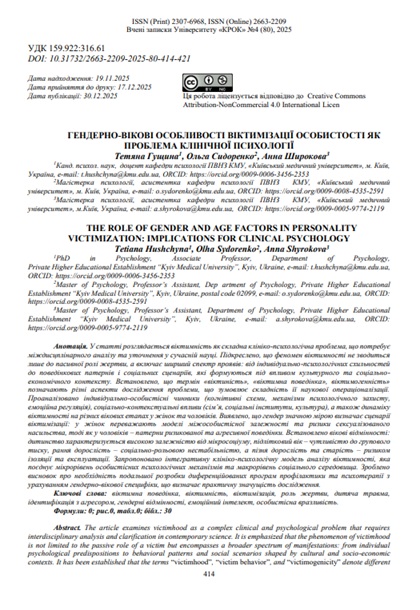
У статті розглядається віктимність як складна клініко-психологічна проблема, що потребує міждисцплінарного аналізу та уточнення у сучасній науці. Підкреслено, що феномен віктимності не зводиться лише до пасивної ролі жертви, а включає ширший спектр проявів: від індивідуально-психологічних схильностей до поведінкових патернів і соціальних сценаріїв, які формуються під впливом культурного та соціально-економічного контексту. Встановлено, що термін «віктиність», «віктимна поведінка», віктимогенність» позначають різні аспекти дослідження проблеми, що зумовлює складність її наукової операціоналізації. Проаналізовано індивідуально-особистісні чинники (когнітивні схеми, механізми психологічного захисту, емоційна регуляція), соціально-контекстуальні впливи (сім’я, соціальні інститути, культура), а також динаміку віктимності на різних вікових етапах у жінок та чоловіків. Виявлено, що гендер значною мірою визначає сценарії віктимізації: у жінок переважають моделі міжособистісної залежності та ризики сексуалізованого насильства, тоді як у чоловіків – патерни ризикованої та агресивної поведінки. Встановлено вікові відмінності: дитинство характеризується високою залежністю від мікросоціуму, підлітковий вік – чутливістю до групового тиску, рання дорослість – соціально-рольовою нестабільністю, а пізня дорослість та старість – ризиком ізоляції та експлуатації. Запропоновано інтегративну клініко-психологічну модель аналізу віктимності, яка поєднує мікрорівень особистісних психологічних механізмів та макрорівень соціального середовища. Зроблено висновок про необхідність подальшої розробки диференційованих програм профілактики та психотерапії з урахуванням гендерно-вікової специфіки, що визначає практичну значущість дослідження.
Завантаження
Посилання
Бантишева, О. О. (2016). Гендерно-вікові особливості схильності осіб юнацького віку до віктимної поведінки. Молодий вчений, 1(28), 132–136.
Бек, А., Девіс, Д., & Фріман, А. (2024). Когнітивна терапія розладів особистості. Київ: Науковий світ.
Бовть, О. Б. (2004). Віктимна поведінка як психологічна проблема. У АКЛ (с. 14–22). Київ.
Бондарчук, О. І. (2006). Психологія девіантної поведінки. Київ: МАУП.
Вакуліч, Т. М. (2009). Психологія віктимної поведінки. Київ: Науковий світ.
Гарькавець, С. О. (2013). Психологія підліткової віктимності: Монографія. Луганськ: Ноулідж.
Герман, Д. (2015). Психологічна травма та шлях до видужання. Львів: Видавництво Старого Лева.
Давиденко, В. Л. (2014). Генеза кримінологічного вчення про жертву. Форум права, 3, 97–101.
Дерев’янко, С., Примак, Ю., & Ющенко, І. (2018). Роль емоційного інтелекту в запобіганні віктимності молоді. Наука і освіта, (9–10), 44–50.
Джужа, О. М., & Сюравчик, В. Г. (2023). Характеристика основних факторів віктимізації дітей і запобігання домашньому насильству. Центральноукраїнський вісник права та публічного управління, 4, 12–18. https://doi.org/10.32782/cuj-2023-4-2
Кибальченко, В. (2017). Віктимізація в дитячому віці як наслідок поліфакторної депривації. Особлива дитина: навчання та виховання, (4), 27–36.
Куравська, Н. В., Лукеча, І. М., & Гошків, В. В. (2022). Гендерні особливості схильності до віктимної поведінки студентів закладів вищої освіти. Науковий вісник Ужгородського національного університету. Серія: Психологія, (4), 45–50. https://doi.org/10.32782/psy-visnyk/2021.4.9
Медвідь, Є. С. (2016). Основи глибинної психології: навчальний посібник. Ніжин.
Мединська, Ю. Я. (2012). Рівень емоційного інтелекту як детермінанта психологічної безпеки особистості. Науковий вісник Львівського державного університету внутрішніх справ, 2(2), 354–359.
Мірошніченко, Т. О. (2016). Загальна характеристика рівнів віктимологічної профілактики корисливо-насильницьких злочинів. Європейські перспективи, (2), 70–74.
Поліщук, І. В. (2016). Психологічне благополуччя осіб із різним досвідом віктимності. Психологія і суспільство, (1), 34–43.
Петрунько, О. В., & Паціора, Г. (2023). Особливості віктимної поведінки молоді. Вчені записки Університету «КРОК», 2(70), 159–165.
Туляков, В. О. (2000). Віктимологія. Соціальні та кримінологічні проблеми. Одеса: Юридична література.
Ференці, Ш. (2024). Змішування мов між дорослим і дитиною. Мова ніжності і пристрасті (пер. М. Євграшиної). Український психоаналітичний журнал, 2(2), 112–117. https://doi.org/10.32782/upj/2024-2-2-10
Фройд, З. (2019). Тлумачення снів (пер. В. Чайковського). Харків: Фоліо.
Шиліна, А. А., & Іванов, М. С. (2016). Гендерні особливості статусно-рольової та поведінкової віктимності неповнолітніх. Право і безпека, 4(63), 169–173.
Courtois, C., & Ford, A. (2013). Treatment of complex trauma: A sequenced, relationship-based approach. Guilford Press.
Fink, B. (1997). A clinical introduction to Lacanian psychoanalysis. Cambridge: Harvard University Press.
Horowitz, M. J. (1986). Stress-response syndromes: A review of posttraumatic and adjustment disorders. Hospital & Community Psychiatry, 37(3), 241–249.
Kalsched, D. (1996). The Inner World of Trauma: Archetypal Defences of the Personal Spirit. Routledge/ Taylor & Francis
Karpman, S. (1968). Fairy tales and script drama analysis. Transactional Analysis Bulletin, 7(26), 39–43.
Olweus, D. (1985). Aggressive behavior among schoolchildren. Bergen: Bergen University Press.
Seligman, M. E. P. (2002). Positive psychology, positive prevention, and positive therapy. In C. R. Snyder & S. J. Lopez (Eds.), Handbook of positive psychology. Oxford University Press.
Freud, A. (n.d.). Defense mechanisms. In Encyclopedia Britannica (Vol. 7, pp. 172–173). London.
Downloads
Опубліковано
Як цитувати
Номер
Розділ
Ліцензія

Ця робота ліцензується відповідно до Creative Commons Attribution-NonCommercial 4.0 International License.