ОПАНУВАННЯ СУЧАСНИМИ ІНСТРУМЕНТАМИ ТАЙМ-МЕНЕДЖМЕНТУ ЯК НАПРЯМ РОЗВИТКУ ТА МОТИВАЦІЇ ПЕРСОНАЛУ В НЕСТАБІЛЬНИХ УМОВАХ ГОСПОДАРЮВАННЯ
DOI:
https://doi.org/10.31732/2663-2209-2025-80-212-217Ключові слова:
тайм-менеджмент, розвиток, мотивація, компетентності, soft-skils, meta-skills, контекстне планування, кайрос-менеджмент, соціальний інтелект, адаптивний інтелектАнотація
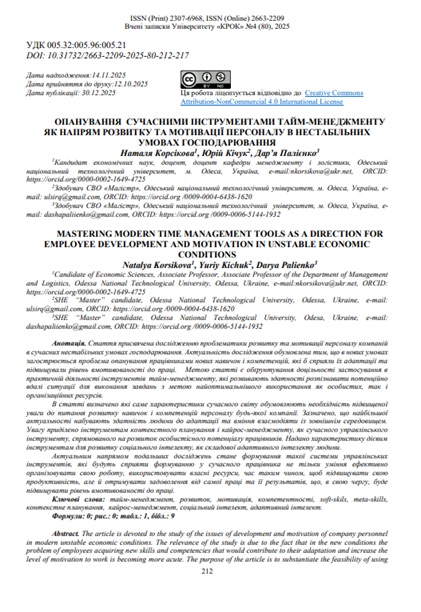
Стаття присвячена дослідженню проблематики розвитку та мотивації персоналу компаній в сучасних нестабільних умовах господарювання. Актуальність дослідження обумовлена тим, що в нових умовах загострюється проблема опанування працівниками нових навичок і компетенцій, які б сприяли їх адаптації та підвищували рівень вмотивованості до праці. Метою статті є обґрунтування доцільності застосування в практичній діяльності інструментів тайм-менеджменту, які розвивають здатності розпізнавати потенційно вдалі ситуації для виконання завдань з метою найоптимальнішого використання як особистих, так і організаційних ресурсів.
В статті визначено які саме характеристики сучасного світу обумовлюють необхідність підвищеної уваги до питання розвитку навичок і компетенцій персоналу будь-якої компанії. Зазначено, що найбільшої актуальності набувають здатність людини до адаптації та вміння взаємодіяти із зовнішнім середовищем. Увагу приділено інструментам контекстного планування і кайрос-менеджменту, як сучасного управлінського інструменту, спрямованого на розвиток особистісного потенціалу працівників. Надано характеристику дієвим інструментам для розвитку соціального інтелекту, як складової адаптивного інтелекту людини.
Актуальним напрямом подальших досліджень стане формування такої системи управлінських інструментів, які будуть сприяти формуванню у сучасного працівника не тільки уміння ефективно організовувати свою роботу, використовувати власні ресурси, час таким чином, щоб підвищувати свою продуктивність, але й отримувати задоволення від самої праці та її результатів, що, в свою чергу, буде підвищувати рівень вмотивованості до праці.
Завантаження
Посилання
Allen, David (2001). Getting Things Done: The Art of Stress-Free Productivity. New York: Penguin Putnam. ISBN 0-670-89924-0
Amran M., Kutty F., & Surat S. (2019). Creative problem-solving (CPS) skills among university students. Creativ. Educ. № 10. P. 3049–3058.
Beuermann-King, Beverly (10 травня 2023). Adaptability Quotient: Strategies Leading To Resiliency and Stress. Work Smart. Live Smart. (en-CA)
Mithun A. Sridharan (29 Jul 2021). BANI: A new framework to make sense of a chaotic world. U URL: https://thinkinsights.net/leadership/bani/
Заблоцький В. (2002). Соціальний інтелект. Філософський енциклопедичний словник / В.І. Шинкарук (гол. редкол.) та ін ; Інститут філософії імені Григорія Сковороди НАН України. Київ: Абрис. 742 с.
Іскерський І.С. (2022). Технології цілепокладання у тайм-менеджменті: сутнісна характеристика. Professional Education: Methodology, Theory and Technologies Vol 16 110 – 127. DOI https://doi.org/10.31470/2415-3729-2022-16-110-127
Лядський І.К. (2025). Кайрос-менеджмент - управлінський інструмент на перехресті соціального інтелекту, самоменеджменту та креативності. Економічний простір. № 198. С. 188-192
Лядський, І. (2024). Методи розвитку meta skills у працівників: social intelligence, self-management, innovation, employability. Таврійський науковий вісник. Серія: Економіка, (20). 258-268. https://doi.org/10.32782/2708-0366/2024.20.31
Матеюк О. та Суходоля Ю. (2021) Соціальний інтелект: психологічний феномен і теоретична проблема. Вісник Львівського університету. Серія психологічні науки. Випуск 11. С. 113-123
Фендьо О. (2022). Soft skills: формування та розвиток гнучких метанавичок фахівців сфери управління. Актуальні проблеми в системі освіти: загальноосвітній заклад середньої освіти – доуніверситетська підготовка – заклад вищої освіти, 1(2), 816–824. https://doi.org/10.18372/2786-5487.1.16672.
Харченко С. В. (2016). Методи розвитку здібностей соціального інтелекту в процесі фахової підготовки. Право і безпека. № 3 (62). С 154-158
Downloads
Опубліковано
Як цитувати
Номер
Розділ
Ліцензія

Ця робота ліцензується відповідно до Creative Commons Attribution-NonCommercial 4.0 International License.