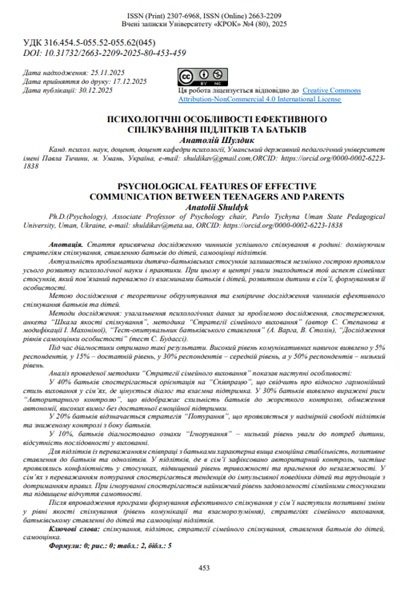
ПСИХОЛОГІЧНІ ОСОБЛИВОСТІ ЕФЕКТИВНОГО СПІЛКУВАННЯ ПІДЛІТКІВ ТА БАТЬКІВ
DOI:
https://doi.org/10.31732/2663-2209-2025-80-453-459Ключові слова:
спілкування, підліток, стратегії сімейного спілкування, ставлення батьків до дітей, самооцінкаАнотація
Стаття присвячена дослідженню чинників успішного спілкування в родині: домінуючим стратегіям спілкування, ставленню батьків до дітей, самооцінці підлітків.
Актуальність проблематики дитячо-батьківських стосунків залишається незмінно гострою протягом усього розвитку психологічної науки і практики. При цьому в центрі уваги знаходиться той аспект сімейних стосунків, який пов’язаний переважно із взаєминами батьків і дітей, розвитком дитини в сім’ї, формуванням її особистості.
Метою дослідження є теоретичне обґрунтування та емпіричне дослідження чинників ефективного спілкування батьків та дітей.
Методи дослідження: узагальнення психологічних даних за проблемою дослідження, спостереження, анкета “Шкала якості спілкування”, методика “Стратегії сімейного виховання” (автор С. Степанова в модифікації І. Махоніної), “Тест-опитувальник батьківського ставлення” (А. Варга, В. Столін), “Дослідження рівнів самооцінки особистості” (тест С. Будассі).
Під час діагностики отримано такі результати. Високий рівень комунікативних навичок виявлено у 5% респондентів, у 15% – достатній рівень, у 30% респондентів – середній рівень, а у 50% респондентів – низький рівень.
Аналіз проведеної методики “Стратегії сімейного виховання” показав наступні особливості:
У 40% батьків спостерігається орієнтація на “Співпрацю”, що свідчить про відносно гармонійний стиль виховання у сім’ях, де цінується діалог та взаємна підтримка. У 30% батьків виявлено виражені риси “Авторитарного контролю”, що відображає схильність батьків до жорсткого контролю, обмеження автономії, високих вимог без достатньої емоційної підтримки.
У 20% батьків відзначається стратегія “Потурання”, що проявляється у надмірній свободі підлітків та зниженому контролі з боку батьків.
У 10%, батьків діагностовано ознаки “Ігнорування” – низький рівень уваги до потреб дитини, відсутність послідовності у вихованні.
Для підлітків із переважанням співпраці з батьками характерна вища емоційна стабільність, позитивне ставлення до батьків та однолітків. У підлітків, де в сім’ї зафіксовано авторитарний контроль, частіше проявлялись конфліктність у стосунках, підвищений рівень тривожності та прагнення до незалежності. У сім’ях з переважанням потурання спостерігається тенденція до імпульсивної поведінки дітей та труднощів з дотриманням правил. При ігноруванні спостерігається найнижчий рівень задоволеності сімейними стосунками та підвищене відчуття самотності.
Після впровадження програми формування ефективного спілкування у сім’ї наступили позитивні зміни у рівні якості спілкування (рівень комунікації та взаєморозуміння), стратегіях сімейного виховання, батьківському ставленні до дітей та самооцінці підлітків.
Завантаження
Посилання
Берегова, Н., & Федорчук, П. (2020). Вплив сімейного виховання на формування особистості дитини. Вісник Львівського університету. Психологічні науки, 6, 10–15.
Мельник, Н., & Дучимінська, Т. (2024). Психологічні особливості впливу стилів сімейного виховання на формування самоприйняття особистості у дітей та підлітків. Інновації в дошкільній освіті: теорія, досвід, перспективи: зб. наукових праць І Всеукраїнської науково-практичної онлайн-конференції з міжнародною участю. Луцьк, 150–184.
Потапчук, Є. М., & Качан, І. О. (2022). Вплив сім’ї та сімейного виховання на формування “Я-концепції” у дітей підліткового віку. Габітус, 42, 84–89.
Сингаївська, І., & Іванова, О. (2023). Коучинговий підхід як інструмент для встановлення довірливих стосунків між батьками і підлітками. Вчені записки Університету «КРОК», 2(70), 166–172.
Сьюзан, М. Джонсон. (2023). Теорія прив’язаності. Емоційно-фокусована терапія для створення гармонійних стосунків (пер. з англ. Колесник, А. А.). Київ.: Науковий Світ.
Downloads
Опубліковано
Як цитувати
Номер
Розділ
Ліцензія

Ця робота ліцензується відповідно до Creative Commons Attribution-NonCommercial 4.0 International License.